If you’ve ever watched a ball skitter sideways on a freshly broken rack, or noticed your cue ball losing steam halfway down the table, the cloth — the fabric playing surface stretched over your slate bed — is almost certainly the culprit. Stock felt that ships on most tables, even mid-range slate tables, is a woven blend with a nap (short, fuzzy fibers standing upright like carpet pile) that creates friction, slows ball speed, and wears unevenly over time. Worsted cloth is the upgrade: a tightly woven, nap-free fabric where fibers are combed flat before weaving, producing a faster, truer surface. The two names you’ll keep seeing once you start shopping are Simonis 860 and Championship Invitational. Both are worsted. Both are legitimate professional-grade choices. But they are not interchangeable, and the wrong pick for your room, your game, or your budget will cost you more in the long run than the price difference between them. This guide breaks down exactly what separates them.
What “Worsted” Actually Means — and Why It Changes Your Game
The Billiard Congress of America’s Equipment Specifications and Standards documentation distinguishes between woven cloth with nap and woven cloth without nap, and the performance difference is not subtle. Per BCA standards, tournament play at the professional level specifies nap-free (worsted) cloth because it eliminates directional inconsistency — the grain of napped cloth can deflect slow-rolling balls by several inches over a nine-foot table, an effect that compounds with age as the nap mats down unevenly.
Worsted cloth is produced by combing long wool fibers into parallel alignment before spinning, then weaving them into a tight, flat face. The result is a surface that plays faster (balls lose less energy to fiber friction), responds more accurately to english (side-spin applied to the cue ball), and holds its geometry longer before re-stretching is needed.
As Popular Mechanics has noted in its overview of pool table surface mechanics, the playing cloth is one of the highest-leverage variables in eliminating shot variance — a point that applies equally to competitive practice sessions and serious recreational play. Both Simonis 860 and Championship Invitational meet the worsted standard. Where they differ is in fiber composition, weight, weave density, and — critically — how those variables translate to feel, maintenance cadence, and cost over a multi-year ownership horizon.
Head-to-Head: Simonis 860 vs. Championship Invitational
Simonis 860 — The Premium Reference Standard
Simonis
$407.00
In stock on Amazon
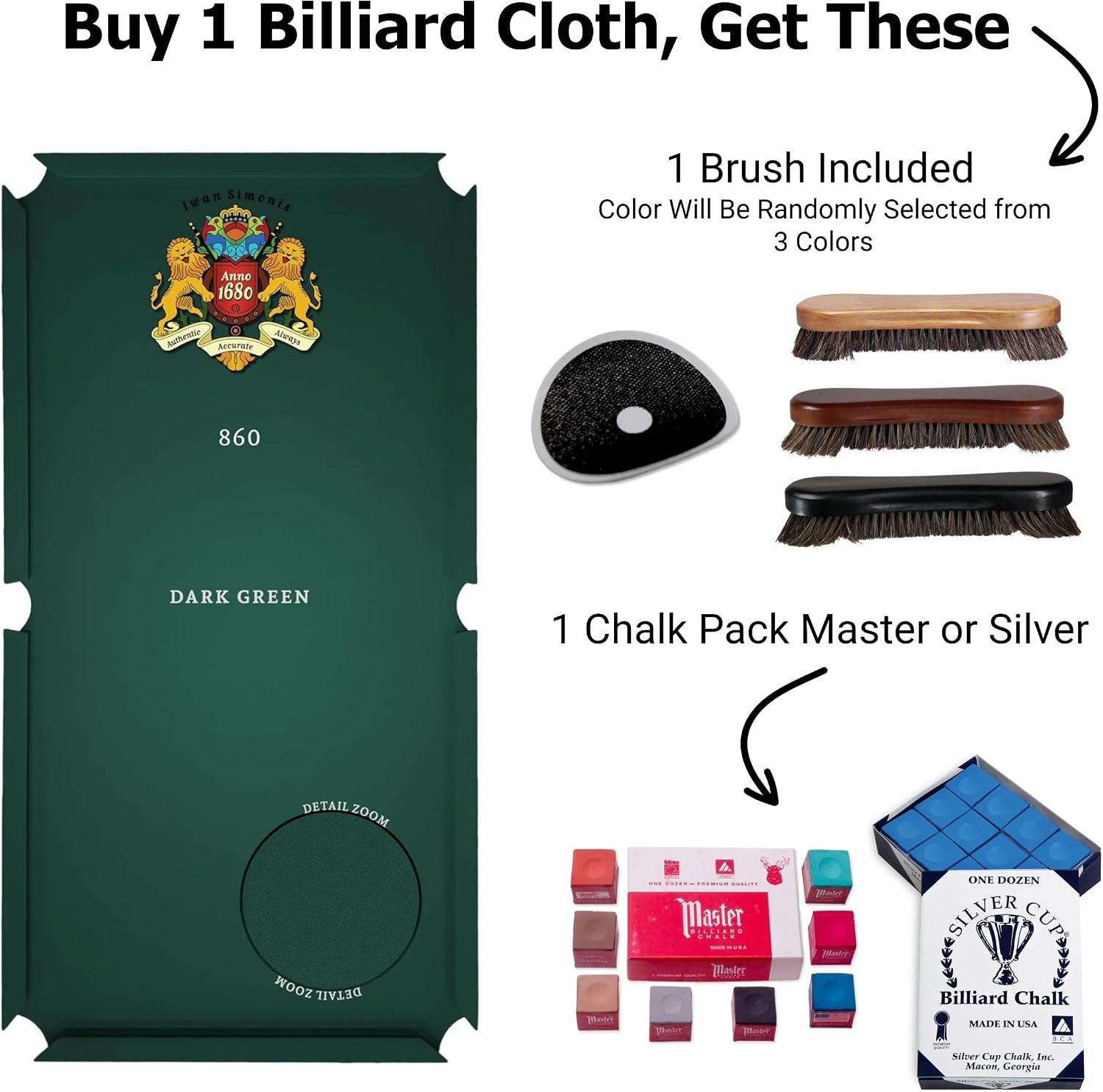
Check price on AmazonSimonis cloth, manufactured in Belgium by Iwan Simonis NV, has been the cloth of record at major professional pool organizations for decades. The 860 is their flagship home-and-tournament crossover model. Per the manufacturer’s published specification sheet for the Simonis 860 series, the cloth is a 90% wool / 10% nylon blend, woven to approximately 167 grams per square meter.
What owners consistently report: The 860 is fast — noticeably faster than any napped cloth and measurably faster than most competing worsted fabrics at similar price points. Players who have made the switch describe the first session as an adjustment: shots that previously died short now carry, and position play requires recalibration. That’s not a flaw; it’s the product doing its job.
The 860’s durability record in long-run owner accounts is strong. Players reporting four to eight hours of play per week describe minimal pilling, consistent color retention, and re-stretching intervals of roughly two to three years under normal conditions. The nylon content contributes to abrasion resistance without compromising the wool’s natural ball response.
The honest tradeoffs: Simonis 860 runs at a premium. As of mid-2026, professional installation on a nine-foot table — cloth plus labor from a certified installer — typically lands in the $400–$600 range depending on region. The cloth alone (tournament cut for a 9-foot table) retails in the $250–$320 range before bumper replacement if your cushions are also due.
Color selection is excellent. Simonis publishes a catalog of over 20 standard colorways including Tournament Green, Electric Blue, and a range of grays and burgundies that photograph well in design-forward game rooms.
Simonis
$407.00
In stock on Amazon
Check price on AmazonChampionship Invitational — The Competitive Mid-Tier Alternative
25
$249.99
In stock on Amazon
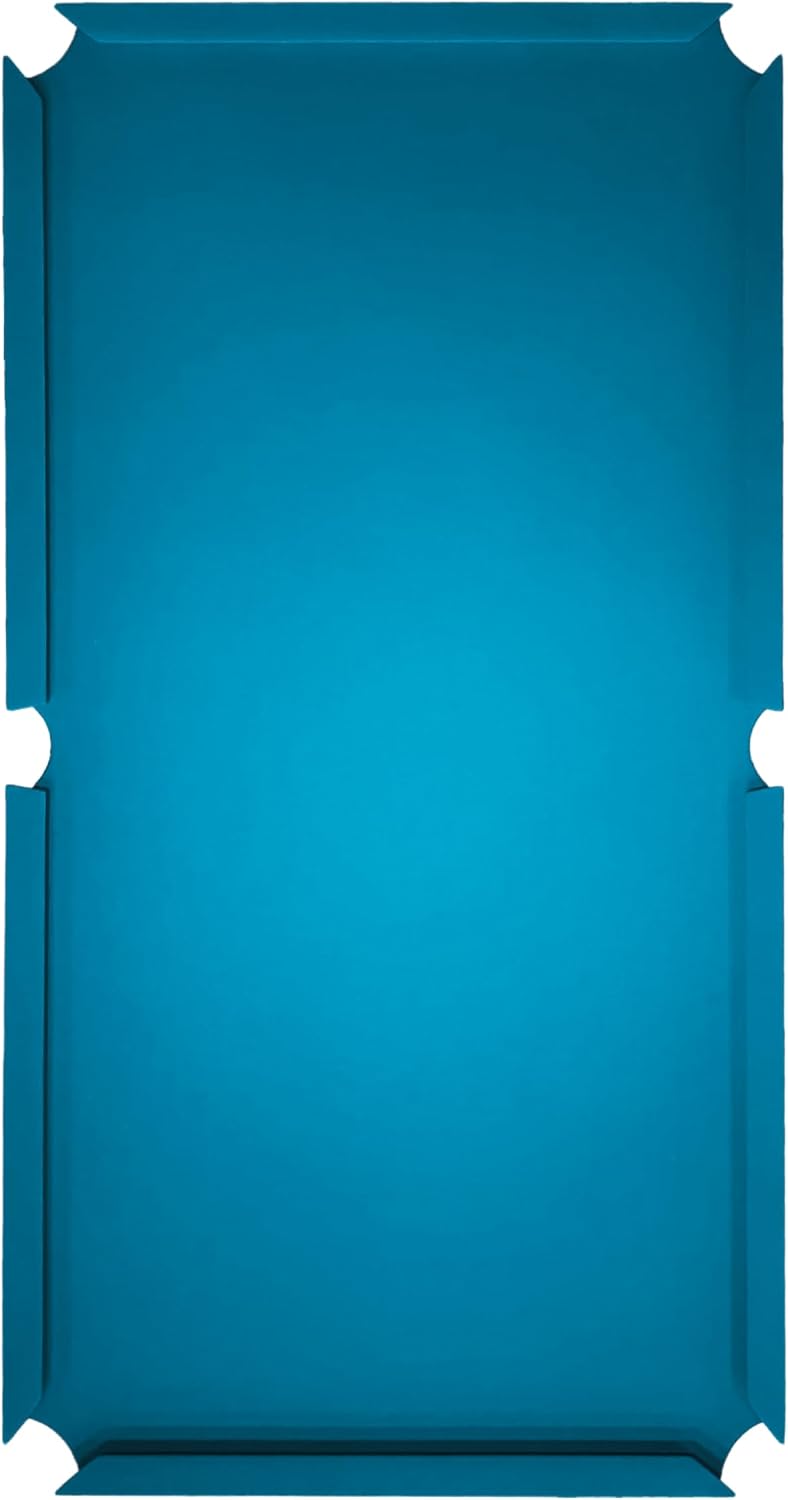
Check price on AmazonChampionship Billiard Fabrics, a US-based manufacturer, produces several cloth tiers. The Invitational is their worsted offering positioned against Simonis — and it genuinely competes rather than merely pretending to.
Per Championship Billiard Fabrics’ Invitational product data, the cloth is a worsted wool blend woven to a weight comparable to the 860’s spec range. The exact fiber ratio is not published with the same granularity as Simonis documents its blend — which is itself a data point worth noting when you’re comparing transparency between manufacturers. The weave is tight enough that ball roll and english response are, by most accounts, very close to Simonis performance in direct room comparisons.
What owners consistently report: The Invitational plays well — especially for home use where table time is measured in hours per week rather than the 40-plus hours a commercial room might log. Players who have used both cloths in back-to-back recovering cycles describe the play difference as present but not dramatic in day-to-day home sessions. Where the gap shows up more clearly is over time: at the two-year mark, a subset of long-run reviewers note the Invitational beginning to show wear patterns — slight napping at the ball-strike zone, minor color fading — ahead of the 860 under equivalent use.
The honest tradeoff going the other direction: The Invitational costs meaningfully less. Cloth-only pricing on a tournament cut for a 9-foot table runs roughly $150–$200 at mid-2026 pricing, putting total installed cost in the $300–$450 range. For a household where the table sees moderate casual play — family game nights, occasional friends-over sessions, one serious player who practices a few times per week — the Invitational delivers the full worsted upgrade at a price that makes the math work differently.
Championship also offers a solid range of standard billiard colorways. It’s less design-catalog than Simonis’s lineup, but the core options cover most game-room aesthetics.
25
$249.99
In stock on Amazon
Check price on AmazonNapped Stock Cloth — The Baseline You’re Upgrading From
CPBA
$200.00
In stock on Amazon
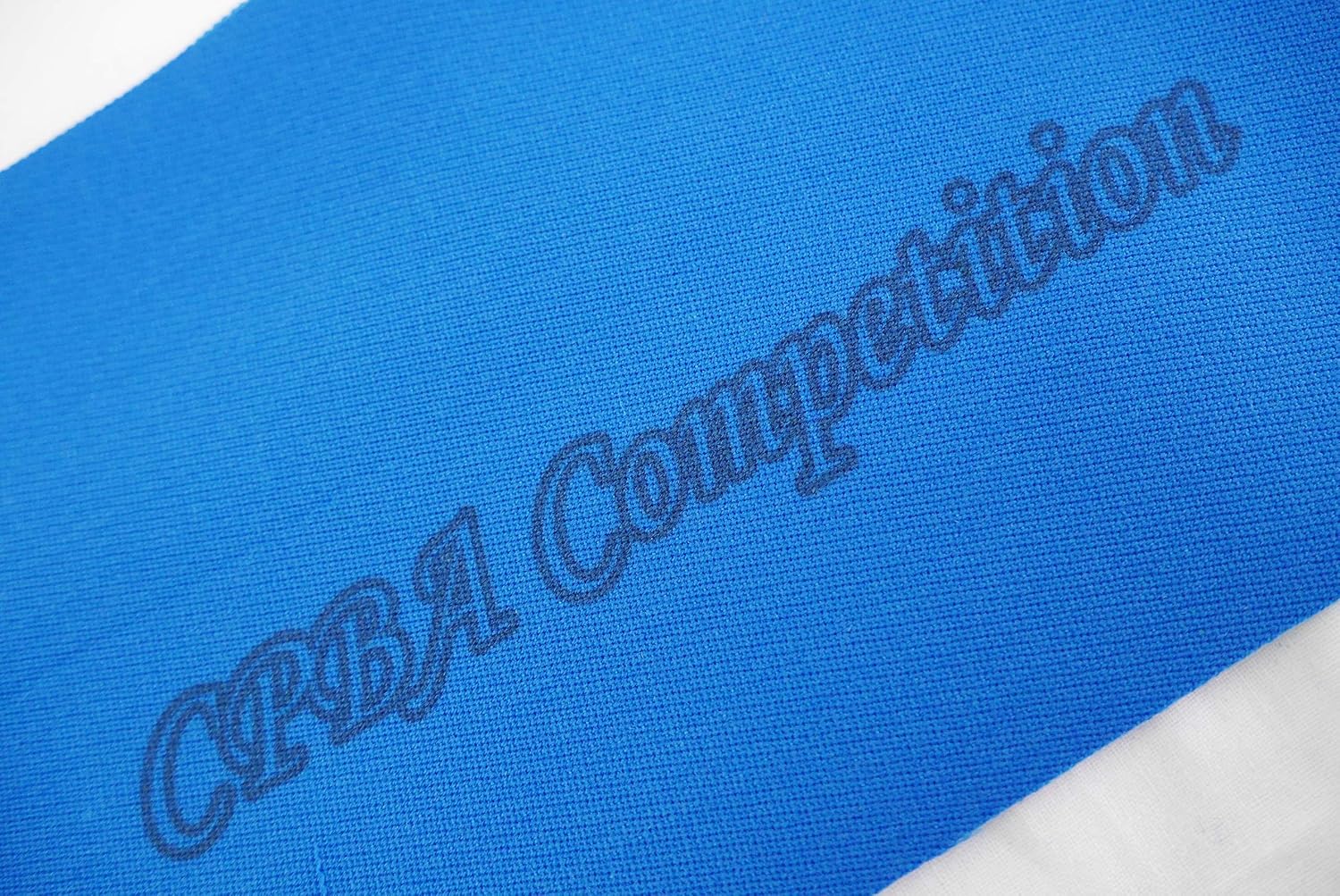
Check price on AmazonMost tables in the $500–$1,500 range ship with napped woven cloth — sometimes marketed as “billiard felt” — that blends polyester and wool in varying ratios. This is the baseline, not a recommendation. It’s worth naming here because understanding what you’re leaving behind clarifies why the worsted upgrade matters.
Per the Billiard Congress of America’s Equipment Specifications and Standards, napped cloth is explicitly distinguished from worsted cloth in tournament-grade equipment requirements. The practical consequence for home players: napped cloth plays slower, responds less consistently to english, and wears unevenly as the nap mats down in high-traffic ball paths — the break zone and the center table area go first, leaving a surface that plays differently in different parts of the table. Re-covering with any worsted cloth eliminates this problem entirely.
If your current table has napped cloth and you’re wondering whether the upgrade is worth it before you’ve tried worsted: it is. The question this guide addresses is which worsted cloth is right for your table and use pattern — not whether to make the switch.
CPBA
$200.00
In stock on Amazon
Check price on AmazonBy the Numbers
| Feature | Simonis 860 | Championship Invitational |
|---|---|---|
| Fiber composition | 90% wool / 10% nylon | Worsted wool blend (ratio not published) |
| Approx. cloth weight | ~167 g/m² | Comparable range |
| Cloth-only price (9-ft cut) | $250–$320 | $150–$200 |
| Installed price estimate | $400–$600 | $300–$450 |
| Expected re-cover interval (moderate home use) | 3–5 years | 2–3 years |
| Colorway catalog depth | 20+ standard options | Solid standard range |
| Manufacturer documentation transparency | Detailed published spec sheet | General product data |
Prices reflect mid-2026 market aggregation from dealer sites; installation labor varies by region.
The Decision Frame: Which One Is Actually Right for Your Table?
Don’t optimize for cloth quality in the abstract — optimize for the combination of your table tier, your play volume, and your five-year total cost.
If your table is a Brunswick Gold Crown, Olhausen Sheraton, or Connelly equivalent in the $4,000–$10,000+ range: The Simonis 860 is the correct call. These cabinets and slate beds are built to last 20-plus years. The cloth is a consumable, but on a table at this tier, spec-matching the playing surface to the hardware matters. The 860’s color catalog gives design-forward buyers more latitude to coordinate with custom cue racks, leather rail trim, and the room’s overall palette. The $100–$150 premium over the Invitational is noise against the table’s total cost of ownership.
If your table is a mid-tier slate purchase in the $800–$2,500 range and you play regularly but not competitively: The Championship Invitational is the honest choice. You’re getting the full worsted upgrade — faster play, better english response, truer roll — without paying Simonis pricing on a table where the limiting factor on shot precision is more likely the cushion profile than the cloth. If you re-cover in two to three years rather than four to five, the total cost over a decade is comparable and you’re getting fresh cloth more often anyway.
If you’re a dedicated amateur working on your game with a real practice schedule: Simonis 860. Consistent cloth behavior across thousands of repetitions matters for shot development. The extended consistency window adds up when you’re logging serious table hours. Popular Mechanics’ reference overview of pool table surface mechanics identifies surface consistency as one of the highest-leverage variables for players trying to eliminate variance from their practice environment — and the 860 simply holds that consistency longer.
One factor most buyers underweight: Installation quality matters as much as cloth choice. A Simonis 860 installed by an uncertified installer with improper tension and staple placement will play worse than a Championship Invitational installed correctly. The Billiard Congress of America maintains a directory of certified table mechanics through its official resources at bca-pool.com — use it. Budget for professional installation as a non-negotiable line item, not an optional add-on.
The Practical Checklist Before You Order
Before you purchase either cloth, confirm these three things:
1. Measure your table correctly. Cloth is sold by table size (7-foot, 8-foot, oversize 8-foot, 9-foot), and cuts vary by manufacturer. Confirm your table’s playing field dimensions — not the cabinet footprint — before ordering.
2. Assess your cushions at the same time. If your rubber cushions are hardening — a ball struck into the rail should return cleanly and consistently, and dead or inconsistent rebound signals aging rubber — replace cushions and cloth simultaneously. Installing premium cloth over dead cushions is a waste. K-66 profile rubber is the North American standard; K-55 is the UK/snooker profile. Confirm you’re ordering the right profile for your rails.
3. Get installer quotes before finalizing cloth choice. In some markets, installers have preferred cloth relationships or stock one brand over another. A certified installer who regularly works with Simonis will produce better results than one who rarely handles it. Ask which cloth they’re most experienced with — that answer sometimes tips the decision.
The bottom line: Simonis 860 is the premium worsted standard and earns that reputation on a long time horizon. Championship Invitational is a legitimate, capable alternative that makes the worsted upgrade accessible on a tighter budget or a mid-tier table. Neither is the wrong answer in isolation — but only one of them is right for your specific combination of table, game, and room. Run the five-year math, match the cloth to the table tier, and don’t skip the professional installation.