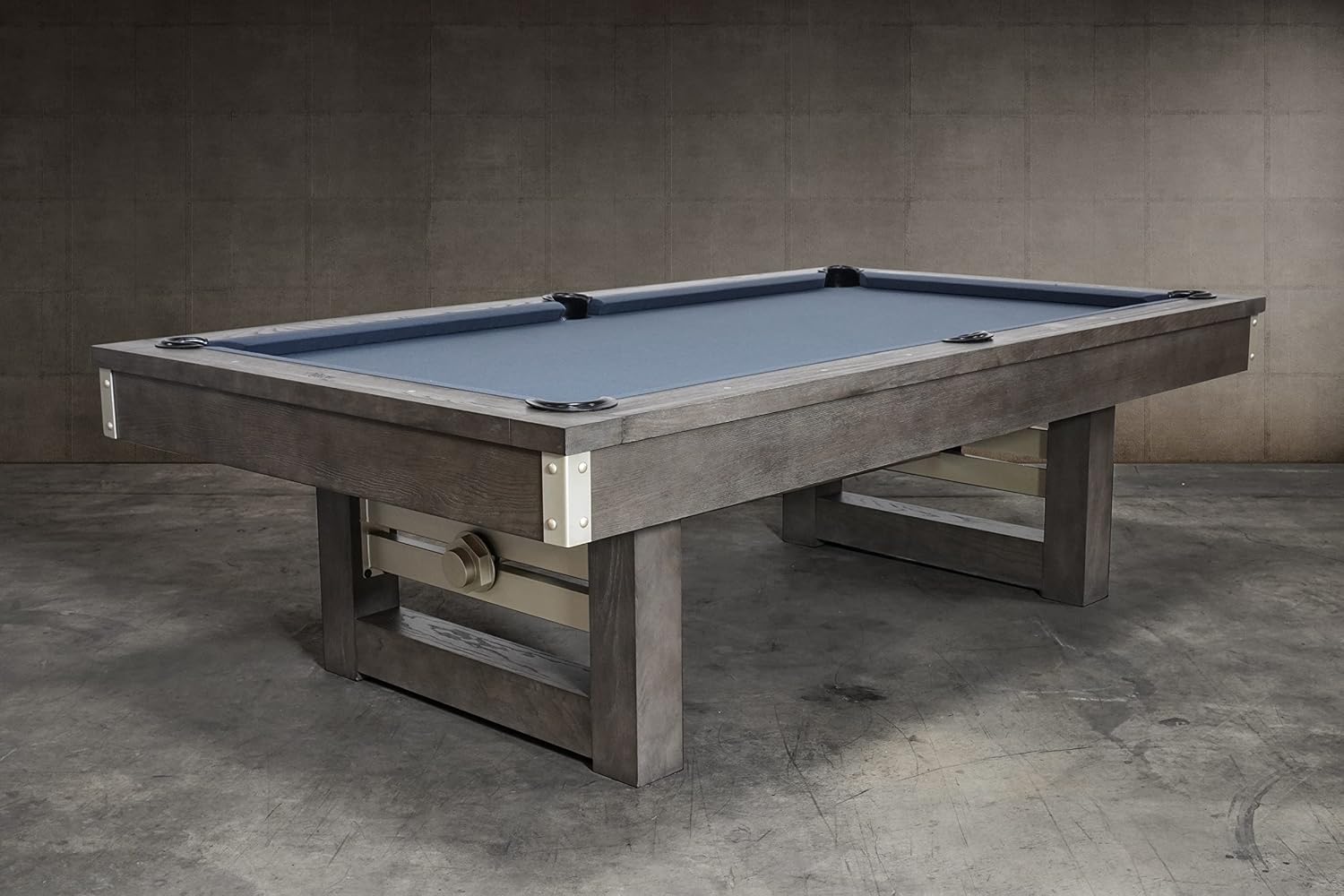
If you’ve ever watched a cue ball drift wide on an older table — no English applied, no obvious reason — you’ve already experienced what happens when a playing surface loses its flatness over time. A pool table’s bed is either made from slate, a heavy metamorphic rock that stays dimensionally stable for decades, or from engineered wood composites like MDF or particleboard, which are lighter and cheaper but respond to humidity, temperature swings, and sustained weight in ways slate simply does not. The distinction sounds technical, but the real-world consequence is direct: a level playing surface keeps your shots honest. One that has warped or sagged doesn’t. This article digs into what five-plus years of ownership actually does to each material type, explains the physics behind why slate holds its edge, and gives you a clear decision framework organized by budget tier so you can match the table to what you actually need.
Why Flatness Degrades — and Why It Matters More Than You Think
Most buyers comparing pool tables focus on felt color, leg style, or brand prestige. Flatness rarely makes the shortlist until a ball starts rolling uphill. But flatness is the single most consequential performance variable in a pool table. The Billiard Congress of America’s Equipment Specifications Manual — the document that governs tournament-legal play in the United States — sets an allowable surface variance of no more than 0.020 inches across the entire playing field. That’s roughly half a millimeter. Exceed that tolerance, and shots that should be predictable start misbehaving.
The BCA specification exists because serious play depends on consistent physics. When the surface is true, a softly struck ball travels in a straight line, holds its speed predictably, and responds to cushion angles the way geometry says it should. When the surface has developed even a subtle warp or sag, every roll becomes a minor correction problem. Casual players tolerate this. Anyone who has invested meaningful money in a table — or who is genuinely trying to improve — does not want to.
The question is which construction actually holds that tolerance over years of real use.
The Three-Piece Slate Advantage Is About Physics, Not Marketing
Slate became the standard playing surface for tournament tables for one reason: it doesn’t move. Geologically, slate is a fine-grained metamorphic rock that was compressed under enormous pressure over millions of years. That process leaves it dimensionally inert — it does not absorb atmospheric moisture, it does not expand and contract significantly with seasonal temperature changes, and it does not creep under sustained load. The Billiard Congress of America’s Equipment Specifications Manual requires that all equipment used in sanctioned BCA play be slate-bedded, which is itself the clearest available statement about long-term surface reliability.
Three-piece construction — where the slate bed is split into three independent slabs joined at the table’s center seams — addresses a practical problem: a single piece of 1-inch slate spanning a 9-foot table is extraordinarily difficult to move without cracking. Splitting it into thirds allows the table to be disassembled and reassembled with precision. The seams are filled, leveled, and verified with a machinist’s level during professional installation. Done correctly, the result is the same flat playing field as a one-piece slab with the added benefit of a table that can move when you do.
This Old House’s guide on pool table leveling confirms the practical implication: slate tables do require periodic releveling as leg hardware settles and hardwood frames respond to seasonal changes, but the slate bed itself remains flat. You’re correcting the table’s position, not compensating for a warped surface.
Popular Mechanics’ buyer’s guide, “Everything You Need to Know Before Buying a Pool Table,” reinforces the same point from a consumer angle: the weight and geological stability of slate are the primary reasons the material has remained the performance standard despite its cost and installation complexity.
What Non-Slate Surfaces Actually Do Over Time
Non-slate tables use engineered wood products — typically MDF or particleboard — as the playing bed. These materials have real advantages at the point of purchase: they’re lighter, less expensive to manufacture, and they arrive pre-assembled without the complexity of a slate installation. In the under-$500 tier, they represent essentially the entire market, and for a family basement table receiving casual use a few times a month, they are a reasonable short-term choice.
The problem is moisture and time.
MDF and particleboard are hygroscopic, meaning they absorb ambient moisture from the air. In a basement — where a large percentage of home pool tables live — this is not a theoretical concern. Basements across most of the continental United States experience meaningful seasonal humidity swings. Popular Mechanics’ pool table buyer’s guide flags this directly: wood composite beds will swell, warp, or sag over time in environments with inconsistent humidity, and once that deformation sets in, it cannot be corrected without replacing the bed entirely.
Bob Vila’s “Best Pool Tables” buyer’s guide notes that non-slate tables are suited for lighter use and that long-term flatness is not reliably guaranteed beyond a two-to-three-year window under typical home conditions.
The degradation pattern is consistent across owner reports: the center of the table, which bears the most weight and absorbs the most ball impact, develops a subtle low point first. Balls rolling toward the center from the rail arrive with slightly different behavior than geometry predicts. Over time, this variance grows rather than stabilizes.
Comparing the Three Tiers: Budget, Mid-Range, and Premium
H3: Budget Tier — Non-Slate Under $600
Non-slate tables in the $200–$600 range use MDF or particleboard beds and are designed for light recreational use. They play acceptably flat when new, particularly in climate-controlled rooms. The honest lifespan in a typical basement with seasonal humidity variation is two to four years before surface irregularity becomes noticeable during play. These tables are not BCA-legal for sanctioned competition, and they carry essentially no residual value once surface degradation begins.
Bob Vila’s “Best Pool Tables” buyer’s guide positions this tier accurately: appropriate for families who want occasional recreational play and are not expecting a table to last a decade. Go in with realistic expectations, treat the purchase as a consumable, and use the moment of surface failure as a natural trigger to upgrade rather than a disappointment.
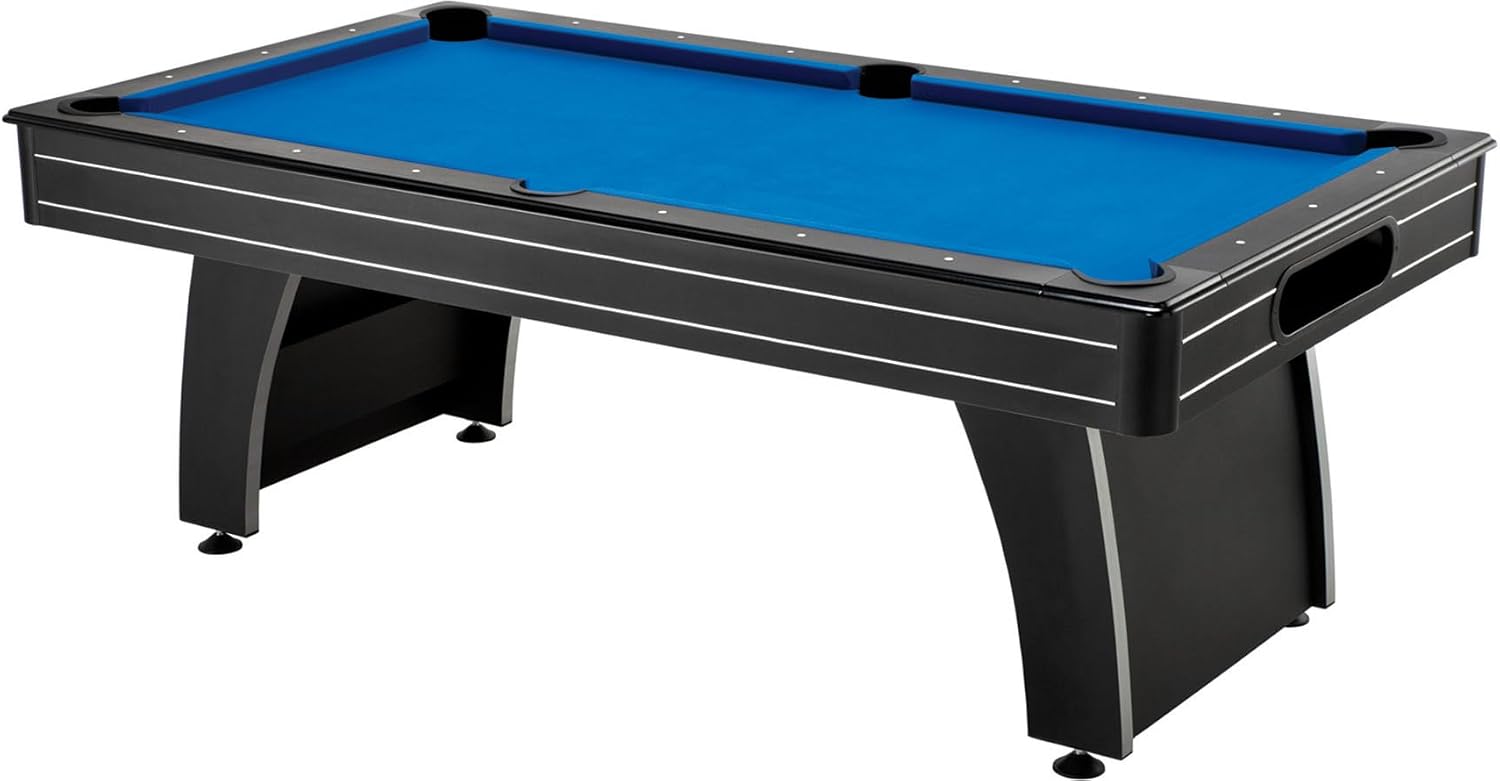
Fat
$822.82
In stock on Amazon
Check price on AmazonH3: Mid-Range Tier — Entry Slate, $1,200–$2,500
Tables in this range from manufacturers such as Viper, Fat Cat, and Hathaway frequently offer genuine three-piece slate construction in both 3/4-inch and 1-inch configurations. This is the tier where the flatness equation changes fundamentally. A properly installed mid-tier slate table will hold its playing surface for fifteen years or more under normal home conditions. The BCA’s Equipment Specifications Manual confirms that slate beds at this construction standard are legal for sanctioned recreational and league play.
Popular Mechanics’ pool table guide recommends this tier for dedicated amateur players and notes that the jump from composite to slate is the single most important upgrade decision a pool player can make. Resale value at this tier is meaningfully positive: mid-tier slate tables in good condition retain a substantial portion of their purchase price years after sale, because the surface is still flat and the hardware is still sound.
One purchasing caution: in this price range, some tables marketed as premium use “simulated slate” or emphasize lightweight construction as a feature. That is a composite bed under a different name. Verify slate construction explicitly before purchasing.
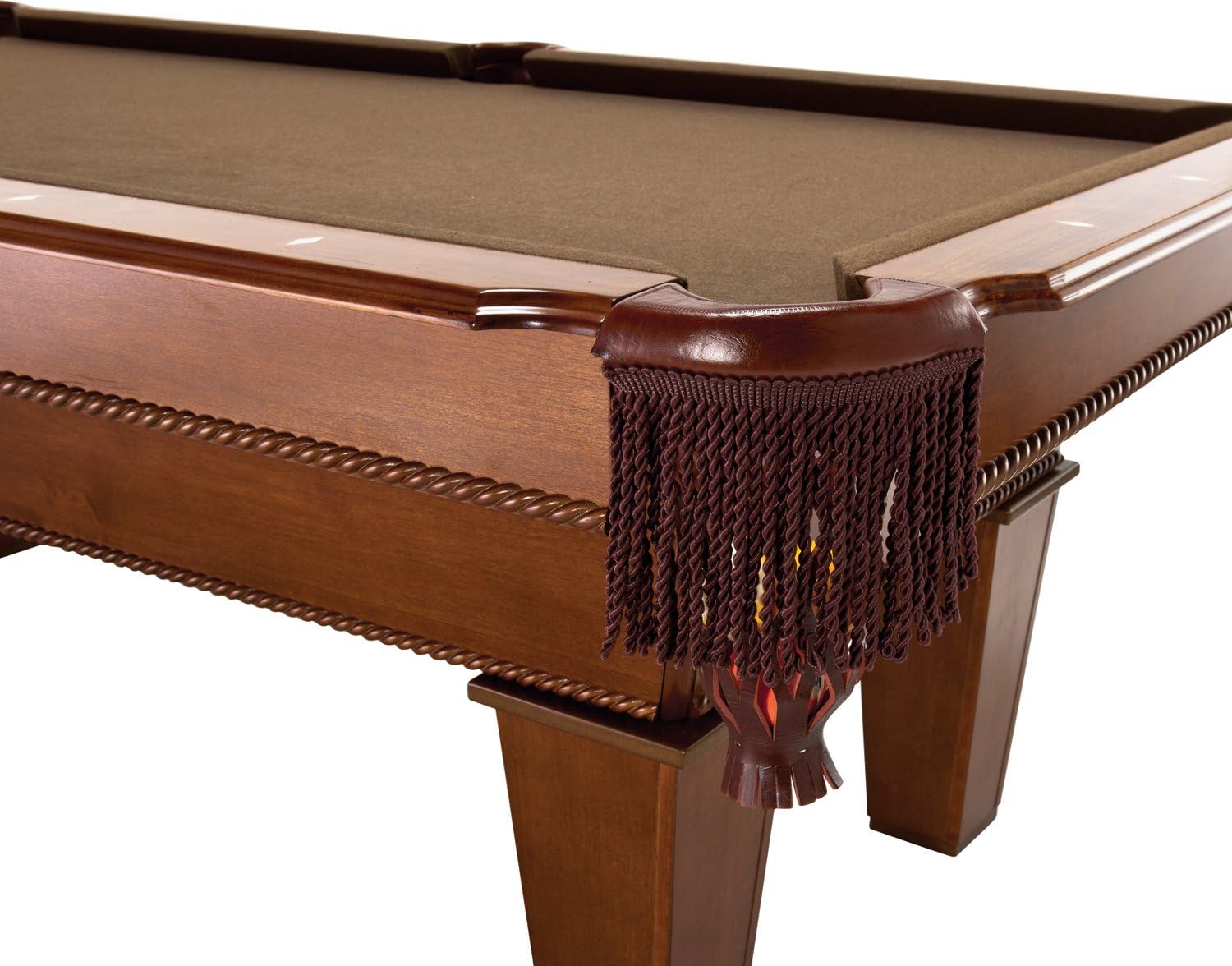
Fat
$1,189.58
In stock on Amazon
Check price on AmazonH3: Premium Tier — 1-Inch Three-Piece Slate, $4,000 and Above
At the premium tier — manufacturers such as Brunswick Billiards, Olhausen, Connelly, and Plank & Hide — the flatness question effectively disappears from the ownership conversation. These tables are specified with solid hardwood cabinetry, 1-inch three-piece slate, K-66 cushion profiles (the standard cushion rubber geometry used in BCA tournament play per the Equipment Specifications Manual), and cabinet-grade joinery. Every element of construction at this price point is engineered to exceed the BCA’s published tolerances, not merely meet them.
This Old House’s pool table installation guide notes that professional installation — the process of shimming, seaming, leveling, and felting — is the step that converts a premium piece of furniture into a precision playing instrument. Budget $200–$400 for a certified table mechanic at 2026 rates. At this tier, that cost is not optional; it is part of the purchase.
The depreciation curve for premium slate tables is nearly flat. A Brunswick or Olhausen table purchased today will still command a strong resale price a decade from now, because the surface is still performing to specification.
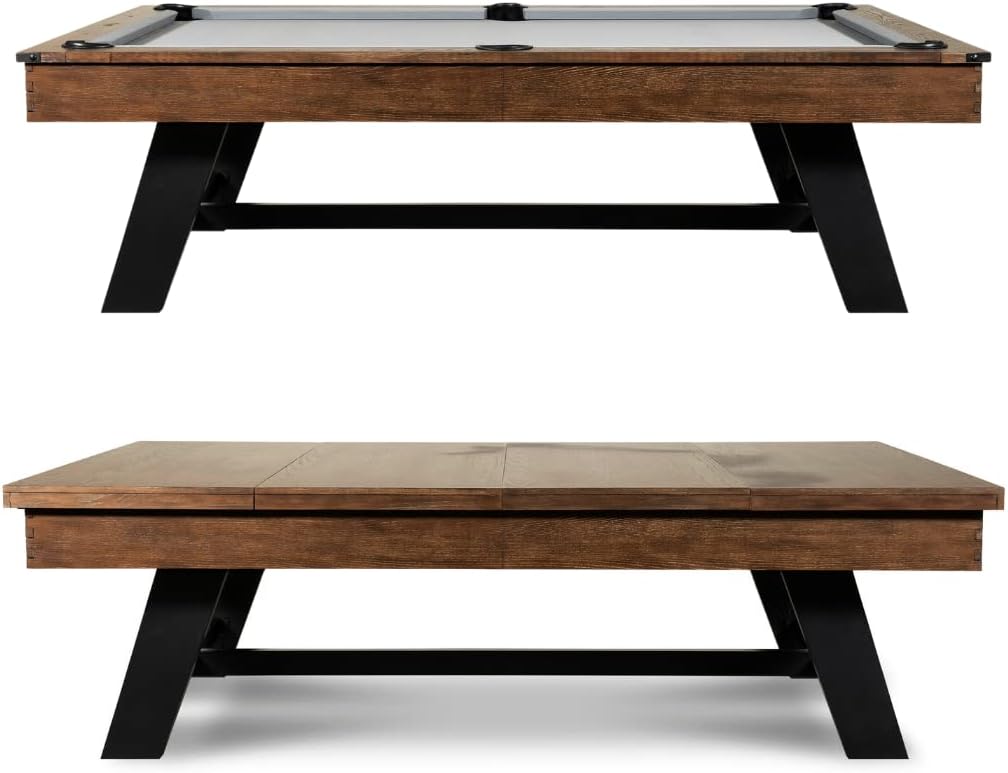
Nixon
$7,799.89
In stock on Amazon
Check price on AmazonThe Real Cost Math Over Eight Years
Here is the tradeoff expressed as a purchase decision rather than a spec comparison.
A non-slate table at $400 gives you something functional today. In three to four years, under typical home conditions, the surface will have drifted outside the range where play feels honest. Two budget tables over eight years equals $800 spent with no residual value and two rounds of assembly. A mid-tier slate table at $1,500 — properly installed — holds its surface for the full eight years and still sells for a meaningful fraction of that price afterward.
At the premium tier, the math inverts entirely. A $6,000 table purchased with a 25-year horizon carries negligible annual cost once you account for the retained value and the absence of replacement cycles. The Billiard Congress of America’s Equipment Specifications Manual was written around this construction standard because it is the one that makes long-term performance reliable enough to govern sanctioned competition.
The Comparison in Summary
| Construction | Flatness Lifespan | BCA-Legal | Price Range |
|---|---|---|---|
| MDF / Particleboard | 2–4 years (variable humidity) | No | $200–$600 |
| Three-piece slate, 3/4” | 10–20+ years | Yes (recreational) | $1,200–$2,500 |
| Three-piece slate, 1” | 20–30+ years | Yes (tournament) | $4,000–$10,000+ |
Fat
$822.82
In stock on Amazon
Check price on AmazonFat
$1,189.58
In stock on Amazon
Check price on AmazonNixon
$7,799.89
In stock on Amazon
Check price on AmazonOne Installation Detail That Changes Everything
A three-piece slate table that has been poorly installed can play worse than a new MDF table out of the box. This is not a criticism of slate — it is a note on process. The seams between the three slate pieces must be shimmed to perfect level, filled with beeswax or a purpose-made leveling compound, and verified with a precision level before the felt is stretched. If a delivery crew rushes this step, you will have visible seam lines under the felt and inconsistent roll across the center third of the table.
This Old House’s pool table leveling guide is explicit on this point: professional installation by a certified table mechanic is the step that determines whether a slate table actually plays to its specification. Budget for it when calculating the real cost of any slate purchase.
The short version: buy slate for the long-term flatness guarantee, but only if you are also committing to a proper installation. A well-installed mid-tier slate table beats a poorly installed premium table every single time.