If you’ve just bought a pool table — or you’re seriously committed to buying one — you’ve probably already started noticing the accessory rabbit hole. Cue sticks (the long tapered rods you use to strike the cue ball), chalk (a small cube that reduces tip slippage on the shot), ball sets, brushes, racks… the accessories list can balloon fast. Some of it is genuinely useful. Some of it is clutter that collects dust next to the table. If you’re at the stage where you’re comparing slate-bed tables and thinking through the full room setup, the accessory decision deserves the same careful thinking — because the wrong cue at the wrong price can cost you more than skimping on table quality, and the right maintenance routine will protect a $4,000 table for twenty years.
This guide is structured for someone who already has a table or has one on the way, has moved past the “what is a pool table?” stage, and is now making real purchasing decisions with a budget to allocate. We’ll walk through the core kit, name the tradeoffs, show the rough math, and end with clear decision rules.
The Foundation Kit: Four Things You Actually Need Before You Break the First Rack
Before adding anything else, these four categories are non-negotiable. Every other accessory is optional or situational. These are not.
1. Cue Sticks — Your Highest-Leverage Purchase
Cue quality matters more than most beginners expect and in a different way than most intermediates assume. The shaft (the thinner, tapered front section) affects deflection — how much the cue ball curves off-line when you apply side spin (called “english”). A cheap shaft with heavy deflection makes spin-based shots unpredictable. That’s a real problem once you’re playing position.
The decision frame:
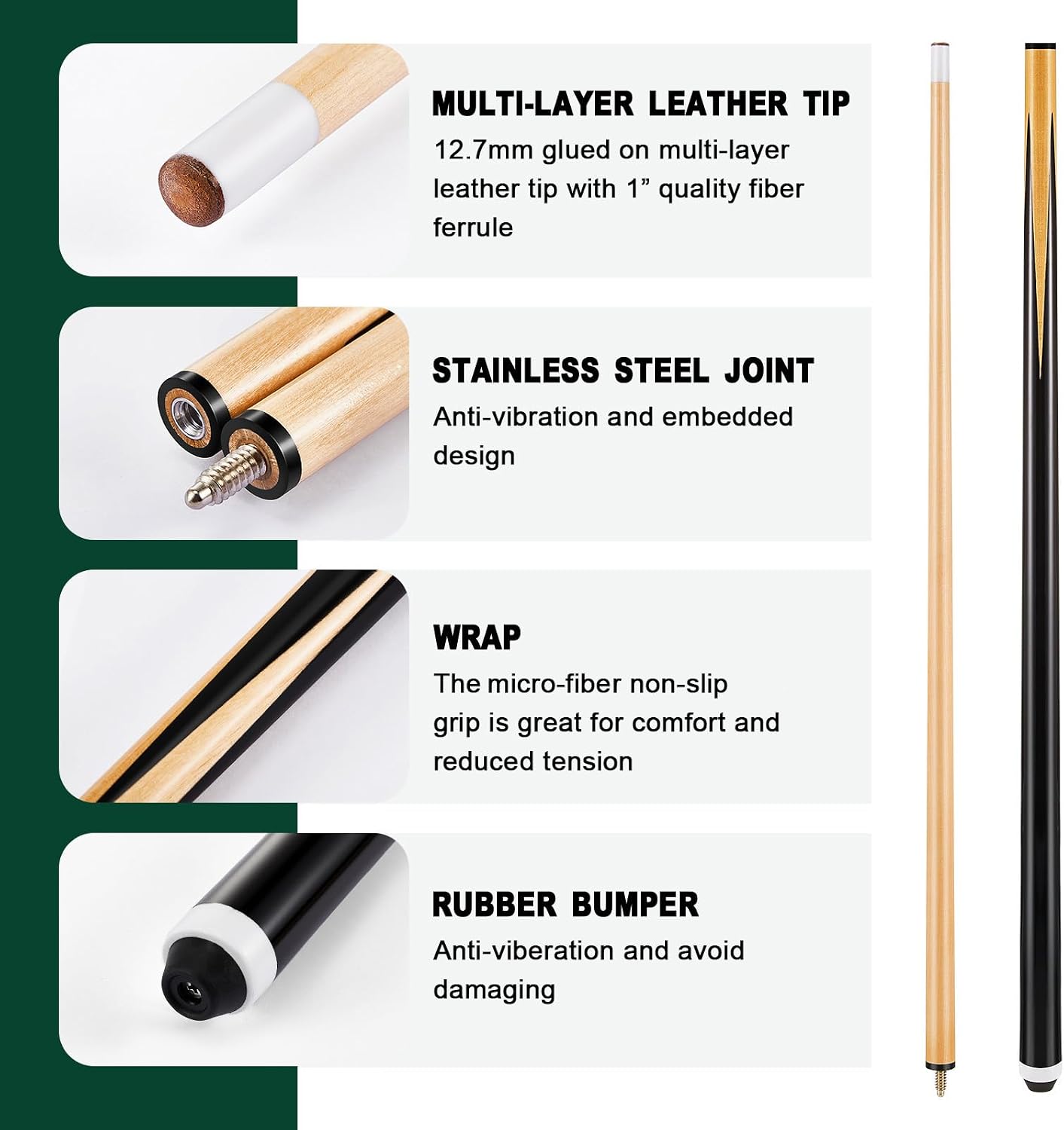
- House cues (under $25 each): Two-piece cues bundled with entry-level tables. Fine for casual guests, not suitable for anyone trying to improve. The ferrule (the white collar at the tip end) warps and the tip mushrooms quickly under regular use.
- Mid-tier playing cues ($60–$150): The sweet spot for a player upgrading from entry-level equipment. Owners on AZBilliards consistently recommend the Predator Roadline and Lucasi Hybrid series at this tier as step-up options with noticeably better feedback than budget sticks.
- Premium playing cues ($200–$500+): Carbon-fiber and low-deflection shafts from brands like Predator, Mezz, and Pechauer. The Billiard Congress of America’s equipment documentation confirms that low-deflection shafts are legal for BCA-sanctioned play, and owner reports across forums are consistently positive on the jump in cue-ball control.
If X, then Y: If you’re playing more than two or three times a week and working on position play, a $100–$150 mid-tier cue pays off in months. If you’re furnishing a game room for mixed casual use, two solid house cues in the $40–$60 range and a dedicated playing cue for yourself is the practical split.
Keep at least four cues available for guests. You don’t need expensive cues in the rack — you need straight ones. Warped cues (check by rolling them across the table) make casual play miserable.
2. Ball Set — Spec Matters More Than Brand Loyalty
Pool balls (the numbered spheres you’re trying to pocket) wear out, chip, and pick up microscopic cracks. A cracked ball rolls erratically. An undersized or oversized ball — yes, manufacturing tolerances vary — affects break patterns and throw (the slight curve a ball takes when struck at an angle).
The Billiard Congress of America’s approved balls list specifies 2¼-inch diameter and 5½–6 oz. weight for standard pool. Balls outside that spec, including many discount sets, run loose on the table and skew break shots.
By the Numbers:
- BCA-approved ball weight: 5½ to 6 oz.
- BCA-approved ball diameter: 2¼ inches (tolerance ±0.005 in.)
- Aramith Premier set (entry-level phenolic resin): ~$100–$130
- Aramith Tournament Black (used in BCA-sanctioned events): ~$230–$270
Aramith’s phenolic resin balls are the standard that owner forums and the broader billiards community consistently cite as the baseline worth owning. The Belgian-made phenolic resin resists chipping and heat buildup from friction significantly better than polyester balls, which is why the difference in longevity justifies the price premium even for casual players. Owners on r/billiards frequently report polyester sets showing visible crazing and flat spots within two years of regular use; phenolic sets routinely last a decade or more.
If X, then Y: If you’re buying once and want it done, Aramith Premier is the right floor. If you have a tournament-grade table or play seriously, Aramith Tournament Black is worth the step up.
3. Chalk and a Tip Tool — The Cheapest Performance Upgrade Available
Chalk is applied to the leather tip of your cue before most shots. It creates friction between tip and ball, preventing miscues (the cue slipping off the ball mid-stroke). This is not optional for consistent play.
The tradeoffs:
- Standard chalk (Masters, Triangle): ~$0.50–$1.50 per cube. Serviceable, widely available. Fine for casual use.
- High-retention chalk (Kamui, Blue Diamond): $5–$15 per cube. Owners consistently report fewer miscues on off-center shots and english applications. Worth considering once you’re practicing spin regularly.
A tip tool — a small device that scuffs, shapes, and pricks (creates texture in) your cue tip — costs $8–$20 and significantly extends tip life. New tips from the factory are often too smooth and too hard; scuffing them creates the porous texture that holds chalk. Per billiards equipment guides published by BCA-affiliated instructors, rough-textured tips retain chalk up to three times longer than smooth ones.
4. A Quality Rack — Triangle Versus Diamond, and Why It Matters
The rack holds the balls in formation before the break. A triangle rack is used for eight-ball (standard 15-ball game); a diamond rack is used for nine-ball (nine balls in a diamond formation). If you play both games, you want both.
Skip the cheap plastic: Thin plastic racks warp and leave gaps between balls, which causes loose racks. A loose rack on the break scatters inconsistently and robs the break of energy. Owner reports across AZBilliards forums consistently flag warped plastic racks as a hidden source of frustrating break variance.
A solid wood or weighted aluminum rack costs $15–$40 and solves the problem permanently. The Magic Ball Rack and similar template-style racks (thin plastic templates that hug the balls directly, eliminating the frame entirely) have strong owner reviews for tight, consistent breaks. Worth the $10–$15 if eight-ball is your primary game.
Table Maintenance Gear: Protect Your Actual Investment
This is the category most buyers underspend on until something goes wrong.
Felt Brush and Cloth Cover
Pool table felt (more precisely, billiard cloth — a worsted wool or wool-nylon blend stretched across the slate playing surface) traps chalk dust, lint, and debris. Left unaddressed, that particulate matter affects ball roll and accelerates cloth wear.
A dedicated billiard table brush — stiff enough to sweep debris off the cloth, but designed not to pill or damage the fibers — costs $15–$30 and should be used after every few sessions. Brush with the nap (in the direction the cloth was laid), never across it.
A fitted table cover ($40–$100 depending on table size) keeps the cloth clean between uses. This is especially valuable in basements, where airborne dust and humidity fluctuate. Owners of Olhausen and Brunswick tables on AZBilliards forums frequently cite uncovered tables as a primary cause of premature cloth wear, particularly in high-humidity environments.
Cue Rack
A wall-mounted cue rack ($30–$80) keeps cues vertical and straight. Cues stored leaning against a wall or lying on the ground develop warps over time due to uneven pressure. A good rack is not a luxury item — it’s basic cue preservation.
For a premium game room matching Plank & Hide or Connelly furniture aesthetics, hardwood matching cue racks are available from those same manufacturers. Architectural Digest’s coverage of high-end game rooms consistently shows matched furniture suites — table, cue rack, and leather seating — as the hallmark of a well-designed billiard space.
What You Can Skip (At Least for Now)
Some accessories are marketed aggressively but offer marginal returns for intermediate players.
Mechanical bridges (also called “spiders”): A mechanical bridge is a cue-mounted attachment that supports the cue over obstacles. You need one — but one is enough. The $15–$25 standard bridge sold with most table kits is functionally identical to premium versions for recreational play.
Ball polishers and cleaning machines: Worthwhile for a commercial room or a household putting serious hours on the table. For most residential setups, a microfiber cloth and a ball cleaner solution every few months accomplishes the same result at a fraction of the cost.
Elaborate lighting rigs beyond a proper billiard light: A purpose-built billiard table light (the long, centered overhead fixture designed to illuminate the table evenly without casting player shadows) is a legitimate need — but it’s a room furnishing decision, not an accessories purchase. Budget separately for it and don’t compromise on the table itself to fund it.
Decision Rules: If X, Then Y
Here’s the allocation logic in plain terms, based on where you are in the process:
If you’re buying a slate-bed table in the $2,500–$5,000 range: Budget $250–$400 for accessories. Prioritize: one good playing cue ($100–$150), Aramith ball set ($130), wood/metal racks ($40), quality chalk and tip tool ($25), brush and cover ($60). That’s your complete functional kit. Add a wall rack and you’re done.
If you’re furnishing a premium game room with a $5,000+ table: The cue and ball budget should scale accordingly. A $200–$300 low-deflection playing cue, Aramith Tournament Black balls, and a matched cue rack from your table manufacturer are appropriate. The total accessory spend at this tier reasonably runs $500–$800 without waste.
If you’re still on a sub-$800 non-slate table: Don’t over-invest in accessories. A single mid-range cue ($60–$80), an Aramith entry-level set, and basic maintenance gear is the right call. Put the savings toward the slate-bed upgrade — that’s where the performance difference actually lives.
If you’re buying for a mixed household (kids, guests, occasional serious play): Four house cues ($40 each), one personal playing cue ($100–$150), Aramith Premier balls, and a covered, brushed table. That setup handles everything without turning maintenance into a burden.
The accessories kit is not where games are won or lost — that’s the table’s slate, the cushion rebound, and the cloth. But the right kit protects that investment and removes the friction that turns occasional players into regular ones. That’s the actual goal.