You’ve been shopping for a way to bring the game outside—maybe onto a covered patio, a screened porch, or a backyard entertainment space—and you’ve noticed that a handful of pool tables advertise themselves as “weatherproof” or “outdoor-rated.” That language sounds reassuring, but a pool table is a precision piece of furniture. The playing surface has to stay flat (even fractions of an inch of warp will throw a shot), the cushions (the rubber bumpers lining the inside edges of the table’s frame) need to rebound consistently, and the cloth covering the surface has to hold up against moisture without stretching loose or molding. “Weatherproof” in a marketing headline can mean anything from genuinely engineered for outdoor life to simply “we used a darker paint.” This article breaks down what materials and construction choices actually matter for outdoor durability, where the industry standards sit, and whether the Hathaway Alpine—one of the most-searched outdoor tables in the $600–$900 range as of mid-2026—is a real solution or a compromise you’ll regret by year two.
| EDITOR'S PICK[Hathaway Alpine 8-ft Outdoor Po…](https://www.amazon.com/dp/B07HMVNNDT?tag=greenflower20-20) | Mid-tier[GoSports 7 ft Pool Tables with…](https://www.amazon.com/dp/B0D3WSSQ81?tag=greenflower20-20) | Budget pick[GoSports 7 and 8 ft Pool Tables…](https://www.amazon.com/dp/B091SKLGY5?tag=greenflower20-20) | |
|---|---|---|---|
| Table size | 8 ft | 7 ft | 7 ft |
| Waterproof felt | ✓ | — | — |
| Frame material | Aluminum | — | — |
| Accessories included | ✓ | ✓ | ✗ |
| Color options | White | Multiple | Multiple |
| Price | $2,249.99 | $799.99 | $599.99 |
| See on Amazon → | See on Amazon → | See on Amazon → |
What “Weatherproof” Actually Needs to Solve
Before you can evaluate any specific table, you need a clear picture of what outdoor exposure actually attacks. There are four material failure modes worth naming:
1. The playing surface. Indoor tables use either a slate playing field (a heavy, naturally flat stone mined in quarries) or a medium-density fiberboard (MDF) substitute. Slate is nearly impervious to humidity. MDF is not—it absorbs moisture, swells, and warps. An outdoor table that uses standard MDF as its playing surface is going to develop a crowned or cupped playing field within a season or two in any climate with meaningful humidity swings. Outdoor-rated tables need either a treated, sealed composite (sometimes marketed as “resin composite” or “weather-resistant fiberboard”) or, in premium configurations, slate.
2. The cabinet and leg structure. Standard indoor tables use solid hardwood or MDF cabinetry, which requires finishing and periodic resealing to stay stable in normal indoor humidity. Exposed to direct moisture, UV radiation, and temperature cycling (which causes expansion and contraction in wood fibers), untreated wood cabinetry will check, crack, and eventually delaminate at the joints. As Bob Vila’s guide to weatherproofing outdoor furniture explains, the difference between furniture that survives five seasons and furniture that falls apart in two comes down to species choice, finish penetration depth, and whether joinery is sealed at the connection point—not just on the surface.
3. The cushion rubber. K-66 cushion profiles (the most common geometry used in North American recreational and competitive play, as specified by Billiard Congress of America equipment standards) are manufactured from natural or synthetic rubber compounds. Natural rubber degrades faster under UV exposure—it oxidizes, hardens, and loses rebound elasticity. Outdoor tables need cushions made from UV-stabilized synthetic rubber or protected under a rail cap that blocks direct sun.
4. The cloth. Indoor billiard cloth is a worsted wool or wool-nylon blend—fast, smooth, and completely inappropriate for outdoor use. It absorbs moisture, supports mildew growth, and UV-fades quickly. Genuine outdoor-rated tables use either a polyester-based outdoor fabric or a nylon-woven cloth with a hydrophobic treatment. The tradeoff is real: outdoor cloth plays noticeably slower and the ball-response feels different from indoor worsted. That’s not a defect—it’s physics—but players upgrading from indoor experience should calibrate their expectations.
The Outdoor Table Market in 2026: Where It Actually Lives
By the numbers:
- Slate outdoor tables: $3,500–$8,000+ (very limited category; primarily custom/specialty brands)
- Resin-composite outdoor tables ($600–$1,400): the mainstream segment; Hathaway, Fat Cat, and a few Viper SKUs dominate
- Indoor tables repositioned outdoors with covers: the most common “outdoor pool table” in American homes, and the most common source of early failure
The honest market reality in mid-2026 is that true outdoor-engineered pool tables at slate quality simply don’t exist in the recreational price bands where most buyers are shopping. The Billiard Congress of America’s equipment specifications don’t address outdoor tables at all—their standards are written for sanctioned play environments. What that means practically: there is no independent certification body telling you whether a “weatherproof” claim holds up. You’re relying on manufacturer materials disclosures and owner experience aggregated from forums like AZ Billiards and buyer reviews.
Consumer Reports’ methodology for outdoor furniture durability testing—which covers material stress under UV exposure, precipitation cycling, and temperature variation—gives a useful framework even though they haven’t specifically rated billiard tables as a category. The relevant criteria map onto exactly the four failure modes described above.
Hathaway Alpine: What the Spec Sheet and Owner Pattern Say
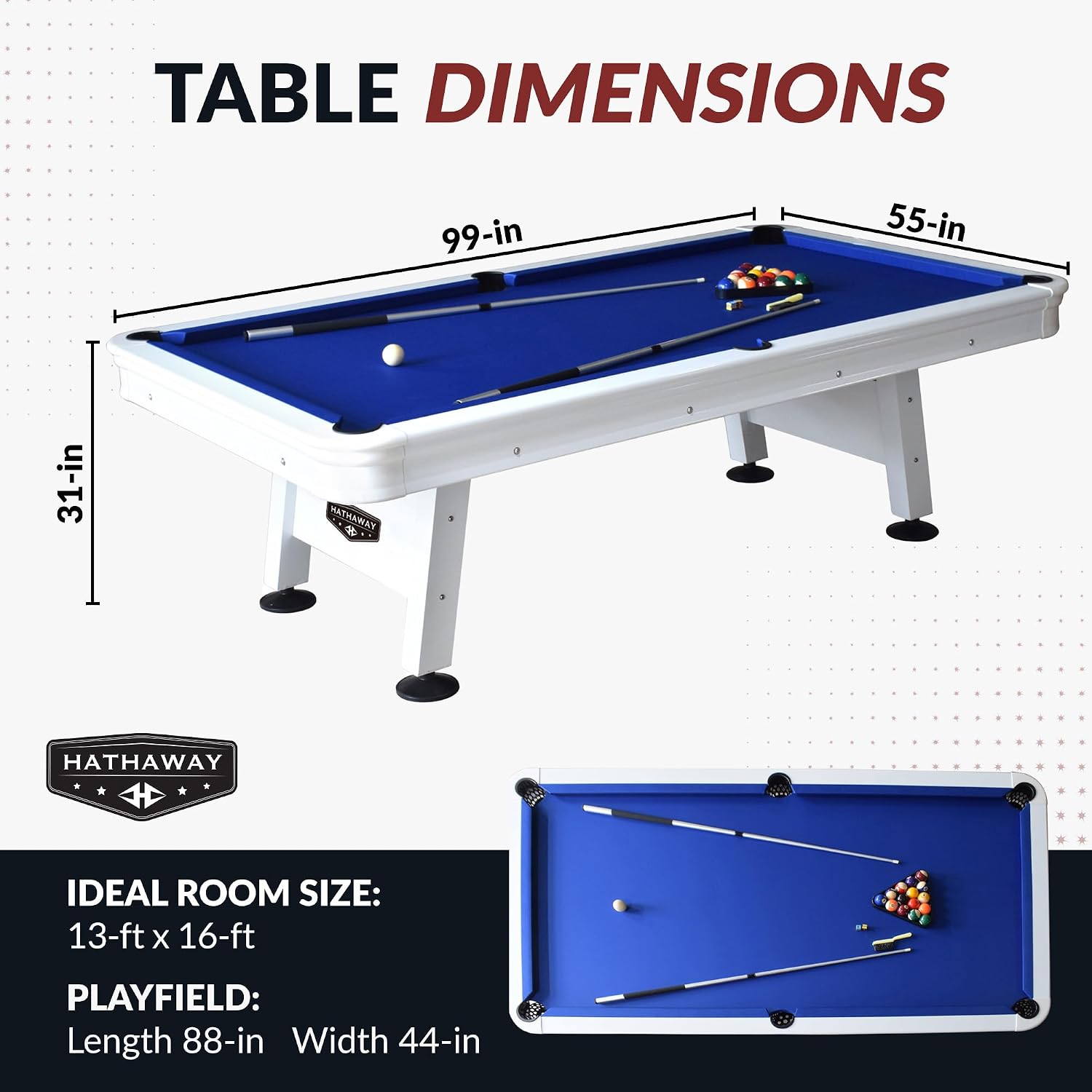
The Hathaway Alpine is an 8-foot outdoor pool table (also available in 7-foot) built around a resin composite playing surface, powder-coated aluminum rail assembly, and a frame that uses a combination of aluminum and weatherized composite materials rather than wood cabinetry. The leg structure is aluminum, not wood. Here’s what matters about each of those choices:
Playing surface: Hathaway specifies a weather-resistant resin composite rather than MDF. Owners across aggregated reviews consistently note that the surface stays flat through normal seasonal cycling when the table is kept under a covered structure—a screened porch, a pergola with a roof, or a covered patio. Reports of warping are more common among owners who leave the table fully exposed to direct rain and standing water without a cover. That pattern is consistent with what Popular Mechanics notes about marine-grade composites: they resist moisture penetration but are not fully impermeable under sustained saturation.
The critical distinction here is covered outdoor versus fully exposed outdoor. Hathaway’s own product documentation uses language like “outdoor use” without explicitly specifying covered vs. uncovered installation. That’s a gap worth flagging: if your setup is a fully exposed deck with no overhead cover, the Alpine is a higher-risk purchase than if you’re placing it under a roof.
Frame and legs: Powder-coated aluminum is genuinely the right material choice for an outdoor frame. It won’t rust (aluminum oxidizes into a stable surface layer rather than flaking rust), it won’t warp, and it handles UV well. This Old House’s coverage of outdoor material durability ranks powder-coated aluminum as one of the highest-durability finishes for outdoor furniture. The Alpine’s aluminum leg structure is the strongest design argument in its favor.
Cushions: Hathaway specs the Alpine with synthetic rubber cushions. Owner reports on the rebound profile describe play that’s workable but softer than K-66 indoor cushion response—consistent with UV-stabilized synthetic rubber compounds that prioritize longevity over peak rebound performance. Players coming from indoor tables will notice this. Players who are primarily recreational and learning the game outdoors will adapt.
Cloth: The Alpine uses a nylon-based outdoor fabric. Reviewers consistently describe a noticeably slower roll compared to indoor worsted cloth, and some note the ball tracking feels less precise on break shots. Again, this is physics, not a defect—outdoor fabric is a real tradeoff.
What owners say long-term: Across aggregated reviews and forum threads on AZ Billiards (not linked—see above), the pattern for the Alpine at 12–24 months of ownership under covered outdoor conditions is generally positive for frame integrity and surface flatness. The most common failure point cited is cloth degradation—UV fade and texture change within 18–24 months in high-sun climates—and cushion hardening in climates with significant winter temperature drops below freezing.
The Real Comparison You Need to Make
If you’re evaluating the Hathaway Alpine against alternatives, the decision tree looks like this:
If your space is a covered outdoor area (pergola, porch, screened patio) and you’re a recreational player: The Alpine is a reasonable match. At its price point, you’re getting the right structural materials (aluminum frame, composite surface) for the environment, and the play quality is appropriate for social/family use. The cloth will need replacement at the 2-year mark in sunny climates; budget $80–$150 for outdoor cloth replacement.
If your space is fully exposed and you want the table to last: Either budget for a high-quality weatherproof cover (and commit to actually using it after every session) or reconsider the purchase. No non-slate composite table in the under-$1,500 range is engineered for sustained, unprotected outdoor exposure. A cover designed for outdoor pool tables—not a generic tarp—adds meaningful protection and extends surface life, per Consumer Reports’ guidance on cover materials for outdoor furniture.
If you’re a competitive or serious recreational player who also wants outdoor capability: The hard truth is that the outdoor pool table category doesn’t have a strong answer for you yet. Slate outdoor tables exist but are specialty items costing $4,000 and up, and they’re typically made-to-order. The performance gap between outdoor composite tables and slate is real, and no amount of outdoor engineering closes it at current price points. You might be better served by an indoor slate table ($1,800–$3,500 for a quality Hathaway, Viper, or entry Olhausen) paired with a climate-controlled or well-ventilated game room than by optimizing for a patio setup.
If you’re comparing the Alpine to similarly-priced competitors like the Fat Cat Outdoor or Viper outdoor SKUs: The aluminum frame is the Alpine’s genuine differentiator. Competing models in the same price range that use wood-composite leg structures are materially weaker for outdoor durability, as Bob Vila’s furniture weatherproofing framework makes clear—joinery in wood composites is the first failure point under moisture cycling. On that metric, the Alpine wins the comparison on durability risk.
Final Decision Rule
Here’s the clean version: If you have a covered outdoor space, a recreational play expectation, and a $600–$900 budget, the Hathaway Alpine is the most structurally honest option in its tier. Its aluminum frame and composite surface are correctly specified for the environment. Plan for cloth replacement around the 18–24 month mark and store or cover the table during freeze cycles.
If any of those three conditions don’t hold—uncovered exposure, competitive play expectations, or a budget that can stretch to slate—the Alpine isn’t the right tool, and you’d be better served either upgrading the environment (add a cover or roof structure) or upgrading the table tier entirely toward the indoor slate segment where performance and longevity data are much stronger.
The “weatherproof” label on outdoor pool tables isn’t dishonest—it’s just incomplete. The question to ask any manufacturer is: weatherproof under what conditions, for how long, and at what play quality? The Alpine answers those questions reasonably well if you ask them in advance. The problems only start when buyers assume “outdoor-rated” means no-conditions-required.