If you’ve ever watched a cue ball veer slightly off-line after a seemingly clean shot, the problem might not be your stroke — it could be the balls themselves. Pool balls vary enormously in how they’re manufactured, and that variation has real consequences for how your game plays. At the top of the market sits Aramith, a Belgian brand that makes balls from a material called phenolic resin — an extremely dense, heat-cured compound used in professional billiard equipment worldwide. Below that tier you’ll find a range of sets made from softer polyester resin or cast acrylic, typically sold at a fraction of the price. This guide breaks down what those differences actually mean at the table, walks through the math on total cost of ownership, and gives you a clear decision rule for where your money should go.
This is not a spec-sheet recitation. If you’re playing on a slate table in the $800–$5,000 range and you’re comparing a $60 ball set against a $200 one, you deserve to know whether that price delta is real or marketing. Let’s get into it.
What Makes a Ball “Play True” — and Why the Material Matters
The Billiard Congress of America’s Equipment Specifications document defines tournament-legal balls as 2¼ inches in diameter with a tolerance of ±0.005 inches and a weight of 5½ to 6 ounces. Those numbers look tight on paper. The gap between phenolic and polyester sets opens not in the nominal spec but in how consistently each material holds that spec over time — and how the surface behaves under repeated friction.
Phenolic resin (Aramith’s core material) is compression-molded under heat and pressure, then precision-ground to final diameter. According to Saluc SA’s Aramith Ball Technology product documentation, the resulting surface hardness is substantially greater than that of standard polyester balls — a difference the manufacturer attributes to the thermosetting nature of phenolic compounds versus the softer thermoplastic base of polyester resin. That hardness matters for two reasons:
-
Roundness retention. Budget polyester balls develop flat spots and micro-deformations under repeated impact and chalk transfer. Players who have used both types over 18–36 months of weekly play consistently describe polyester sets showing visible scuff rings and wobble within the first 12–18 months, while phenolic sets routinely roll true after five or more years of heavy use.
-
Friction consistency. The harder surface of phenolic balls transfers chalk and cloth oils differently. Polyester balls accumulate surface grime faster, leading to uneven friction across the cloth and unpredictable spin response — especially on draw shots (pulling the cue ball back toward you) and stun shots (killing the cue ball’s momentum on contact).
The roll-true failure that budget sets experience isn’t dramatic. You won’t see a ball rolling in a visible arc on a new table. What you’ll notice — once you’ve logged enough hours — is the cue ball not quite doing what your angle math predicted. That inconsistency is cumulative. It trains bad compensation habits that persist even after you upgrade.
The Numbers: Price vs. Lifespan vs. Cost Per Game
Here’s the math that actually shifts the decision. The table below maps each tier to realistic street pricing, expected lifespan under regular home use, and approximate annual cost.
| Set Type | Street Price (2026) | Estimated Lifespan | Cost Per Year |
|---|---|---|---|
| Budget polyester (Viper, Fat Cat OEM) | $35–$70 | 1–2 years | $25–$55 |
| Mid-range phenolic (Aramith Club Pro) | $90–$130 | 4–6 years | $18–$28 |
| Premium phenolic (Aramith Tournament) | $200–$280 | 7–12+ years | $20–$35 |
The counterintuitive result: the mid-range Aramith set often beats budget polyester on cost-per-year within 24 months. The premium Aramith set costs slightly more annually than the Club Pro but delivers a measurably different play experience — one that matters at the semi-competitive level.
Pricing sourced from current retailer listings across major billiard equipment suppliers as of Q2 2026.
Where Budget Sets Fall Apart: Three Specific Failure Modes
Understanding how cheaper balls fail helps you recognize when your current set is the problem rather than your technique.
Failure Mode 1: Cue Ball Drift on Low-English Shots
English — side-spin applied by striking off-center — is one of the primary tools for position play (controlling where the cue ball ends up after a shot). On a worn polyester cue ball, micro-deformations create inconsistent contact points with the cloth. The symptom is English that doesn’t track as expected, or a cue ball that takes a different path than the shooter called. This isn’t imagination — it’s the physics of an imperfect sphere rolling on a flat surface.
Saluc SA’s Aramith Ball Technology product documentation describes sphericity tolerances achieved through their compression-molding and precision-grinding process as among the tightest available in commercial ball production. Budget polyester manufacturers do not typically publish sphericity specifications.
Failure Mode 2: Accelerated Cloth Damage
This failure mode costs money beyond just the balls themselves. The Billiard Congress of America’s Equipment Maintenance Guidelines note that ball surface hardness correlates directly with cloth longevity. Softer polyester balls generate more friction heat during contact, increasing cloth fiber abrasion. Pool hall operators — a population with direct financial exposure to this variable — consistently report that cloth replacement cycles shorten meaningfully when switching from phenolic to cheaper OEM ball sets. For a home table, that means a cloth recovery ($300–$600 installed, depending on felt grade) arriving 18–24 months earlier than necessary.
Failure Mode 3: Yellowing and UV Degradation
Polyester and acrylic balls yellow noticeably under standard room lighting within two to four years. This is primarily an aesthetic complaint but carries a practical dimension: inconsistent ball coloring affects visibility on cut shots and slows number identification in fast-play situations. Per Saluc SA’s Aramith Ball Technology product documentation, the phenolic compound used in Aramith balls demonstrates greater UV stability than polyester alternatives, with documented color integrity well past the five-year mark under normal indoor conditions.
Aramith Tier-by-Tier: Which Set Belongs at Your Table
Aramith’s product line now covers multiple price points, which creates its own decision problem. The three tiers below map clearly to distinct use cases, and each section closes with a tier marker so you can navigate directly to the right option.
Tier 1 — Aramith Club Pro ($90–$130): The Recreational Upgrade
The Aramith Club Pro is the correct choice for a home table with consistent but recreational use — family play, occasional hosting, weekly sessions with friends. The phenolic compound is the same core material as the premium lines; the primary differences are surface finish detail and the specific cue ball included. For anyone stepping up from a budget polyester set for the first time, this is the natural landing point. The cost-per-year math justifies the upgrade over budget polyester within approximately 24 months of weekly play, and the difference on draw shots is immediately noticeable.
Best for: Home slate tables, weekly recreational play, first-time upgrade from budget polyester.
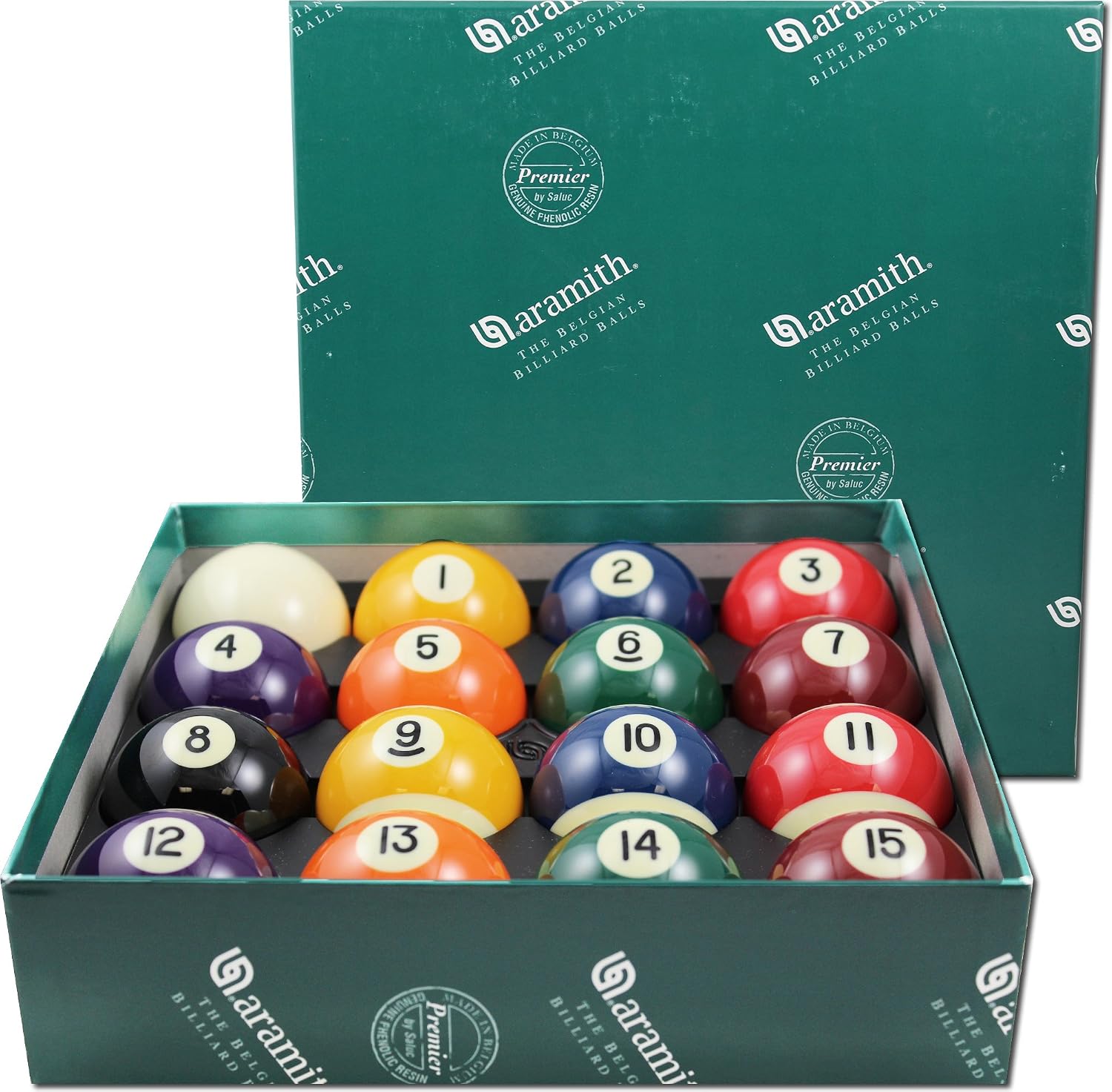
Aramith
$182.81
In stock on Amazon
Check price on AmazonTier 2 — Aramith Super Pro ($150–$200): The Semi-Competitive Step Up
The Super Pro adds a more refined surface polish and tighter production tolerances than the Club Pro. The upgrade makes sense if you’re playing in a home league, running money games, or practicing position play with genuine focus on cue ball routing. The object ball finish gives more consistent cloth interaction across the full set, and players who’ve been on Club Pro for a year and want to feel the next increment of performance will find it here. Saluc SA’s Aramith Ball Technology product documentation attributes the difference partly to additional finishing passes in the grinding process applied to the Super Pro line.
Best for: Semi-competitive players, home leagues, regular practice on position play and pattern development.
Aramith
$182.81
In stock on Amazon
Check price on AmazonTier 3 — Aramith Tournament Black ($220–$280+): The Serious Practice Standard
The Billiard Congress of America’s Equipment Specifications reference phenolic construction as the expected standard for sanctioned play environments. The Aramith Tournament Black meets that standard at the amateur level and adds a black cue ball that shows deflection paths more clearly for training purposes — making it a genuine practice tool rather than a cosmetic upgrade. For most home players, this tier is aspirational rather than necessary; where it makes clear sense is preparing for sanctioned amateur events, playing at a level where cue ball deflection precision costs frames, or building a game room where the table is a significant investment and full equipment parity is the correct spec call.
Best for: Serious amateur competitors, premium game rooms paired with high-end tables, players training cue ball deflection control.
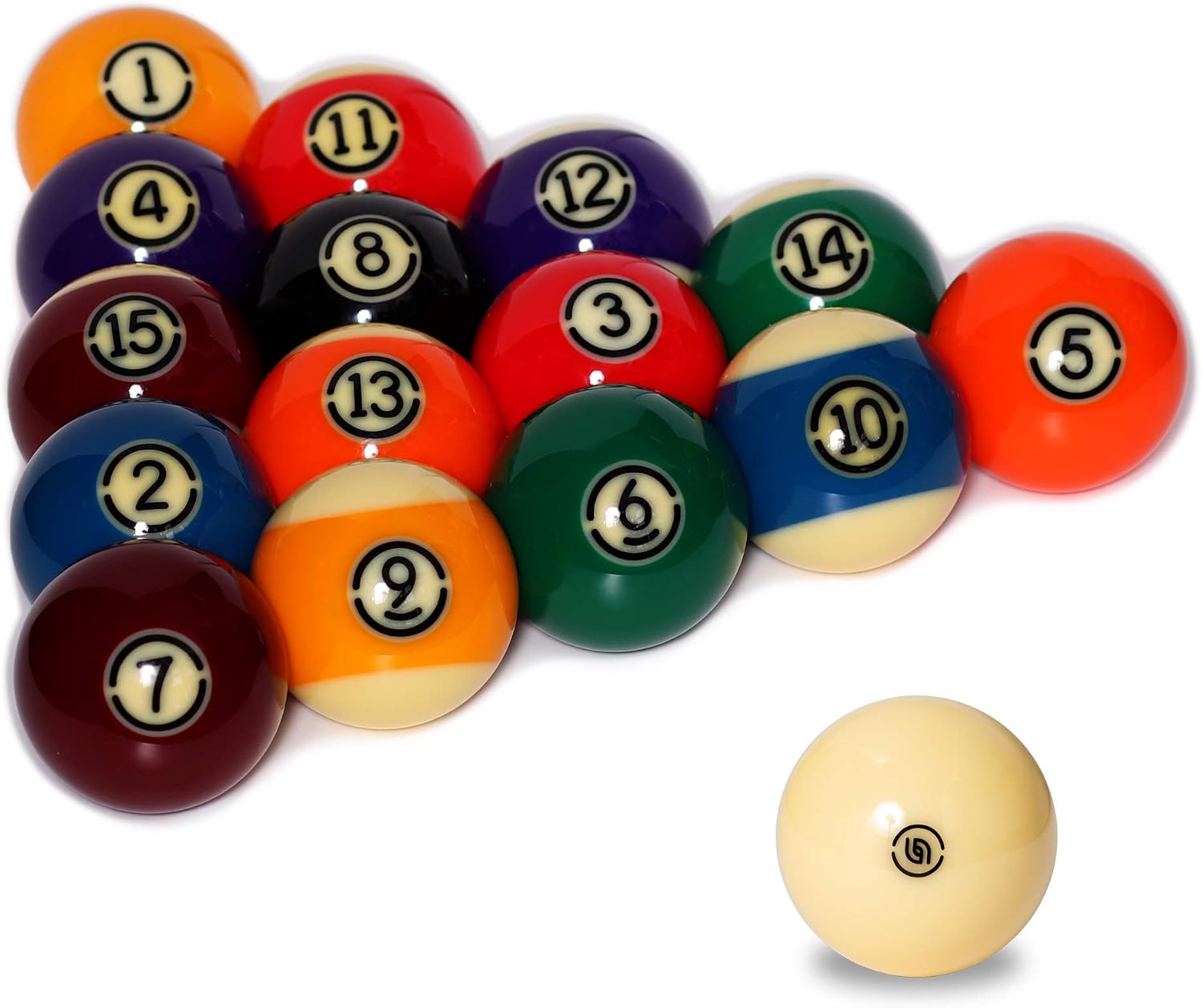
Aramith
$426.30
In stock on Amazon
Check price on AmazonWhen Budget Balls Are Actually the Right Call
Not every situation calls for phenolic resin. There are specific scenarios where a budget polyester set is the correct purchase — and choosing otherwise wastes money.
The Budget Case: Match Equipment to the Table and the User
- Children’s or family-first tables under $500: If the table is a non-slate unit and the primary users are kids under 14, a $40 polyester set is appropriate. Match ball quality to table quality and use case.
- Short-term rentals or event setups: If you’re furnishing a temporary rec space or a rental property, the cost-per-year math reverses — you need low upfront cost, and there won’t be enough cumulative play for wear to matter.
- Testing whether billiards is your game: New players who haven’t committed to the hobby shouldn’t buy $250 balls during a learning phase. A Club Pro set at $100–$130 is the reasonable floor for anyone who suspects they’ll stick with it; below that threshold, budget polyester is an acceptable short-term placeholder.
The line is simple: if you’re on a slate table playing more than once a week, phenolic math pays off within 24 months. Below that threshold, match the investment to the intensity.
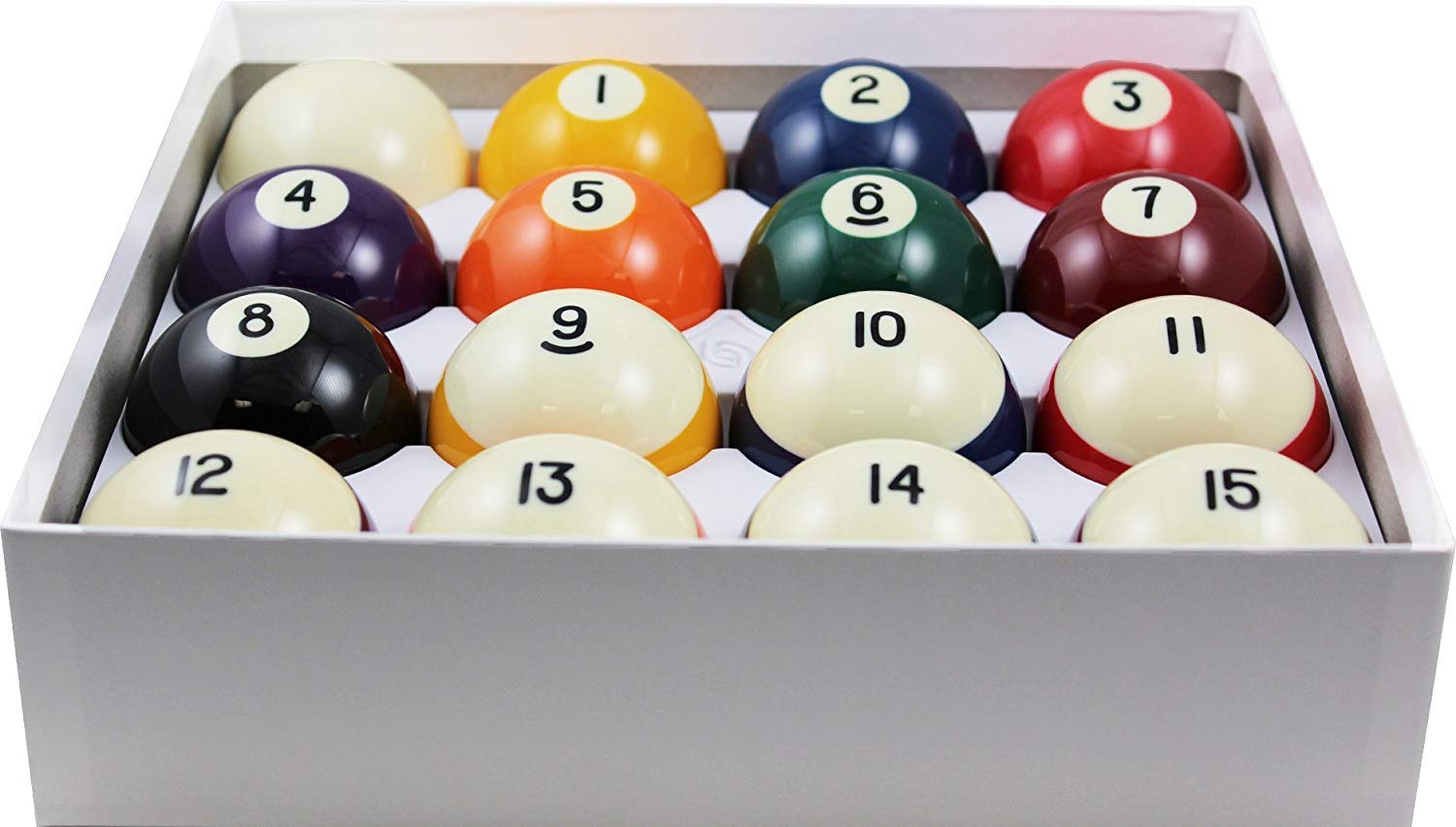
Aramith
$119.74
In stock on Amazon
Check price on AmazonThe Decision Rule
If your current ball set is more than three years old, you’re playing on a slate table, and you’ve been blaming your stroke for positional inconsistencies — replace the balls first. It’s the cheapest variable to eliminate.
Match your setup to the right tier:
- Non-slate table, casual play: Budget polyester (Viper, Fat Cat OEM) is fine. Save the Aramith budget for when you upgrade the table.
- Entry slate, weekly play: Aramith Club Pro. The cost-per-year math justifies it by year two, and you’ll notice the difference on draw shots immediately.
- Semi-competitive, practicing position play seriously: Aramith Super Pro. Surface consistency matters when you’re thinking about pattern play and cue ball routing across a full rack.
- Premium game room, $5,000+ table investment: Aramith Tournament Black. Equipment parity is real — pairing a phenolic set with a high-end table is the correct spec call, for the same reason you don’t pair premium strings with a toy guitar.
- Pool hall or high-traffic home setup: The accelerated cloth-wear data referenced in the Billiard Congress of America’s Equipment Maintenance Guidelines makes Aramith Club Pro the economic floor regardless of player skill level. The cloth savings alone recover the ball cost within a standard re-felt cycle.
The roll-true gap between phenolic and budget polyester is real, measurable, and cumulative. It doesn’t ruin your game overnight. But if you’ve invested in a quality slate table and you’re still playing with the balls that came in the box — or a $40 set from a big-box retailer — you’re leaving a meaningful fraction of that table’s performance unused. The upgrade costs less than a re-felt, and it lasts longer than two of them.